
How to Move a Parent With Dementia to Memory Support
Moving a parent with dementia to a new environment is a journey often marked by uncertainty and deep emotion. At Village Shalom, we understand that this transition is a significant milestone for both the senior and their family. Our Memory Support program is designed to care for the “whole person,” nurturing cognitive, physical, and emotional capabilities within a secure, upscale setting.
Identifying the Right Living Situation at Village Shalom
At Village Shalom, we offer a continuum of care that allows families to choose the environment best suited for their parent’s current needs:
- Village Shalom Assisted Living: Often the ideal choice for seniors in the earliest stages of memory loss. This setting supports independence while providing the safety of 24-hour staff.
- Direct Entry to Memory Support Suites: If your parent requires a secure environment or structured programs to enhance cognitive function, they can move directly into one of our private Memory Support suites.
- Transitioning Within the Community: For current residents whose dementia has progressed, moving from assisted living to a specialized Memory Support suite provides 24-hour supervision and a higher level of specialized care.
- Skilled Nursing Care: If a parent has serious or chronic medical conditions that require 24/7 medical oversight, our Skilled Nursing neighborhoods provide compassionate care alongside dementia support.
Steps to Take Before the Move
Preparation is the most effective way to avoid relocation stress syndrome and facilitate a peaceful transition.
1. Establish a Simple Family Script
Hearing different opinions can overwhelm a senior with dementia. To provide security, the entire family should use a consistent, simple script. Everyone should use the same language so your parent isn’t confused by different explanations. Stick to straightforward, reassuring phrases like, “You’re going to your new home where you’ll be safe”.
2. Pack Discreetly and Strategically
The process of boxing up a lifetime of memories can trigger panic in a person with dementia. Consider packing when your parent is at an appointment, asleep, or spending time with friends to minimize stress. On moving day, ensure you take all empty boxes and suitcases with you when you leave; seeing them can lead a resident to try to “pack up” and leave their new home.
3. Personalize the Suite Before They Arrive
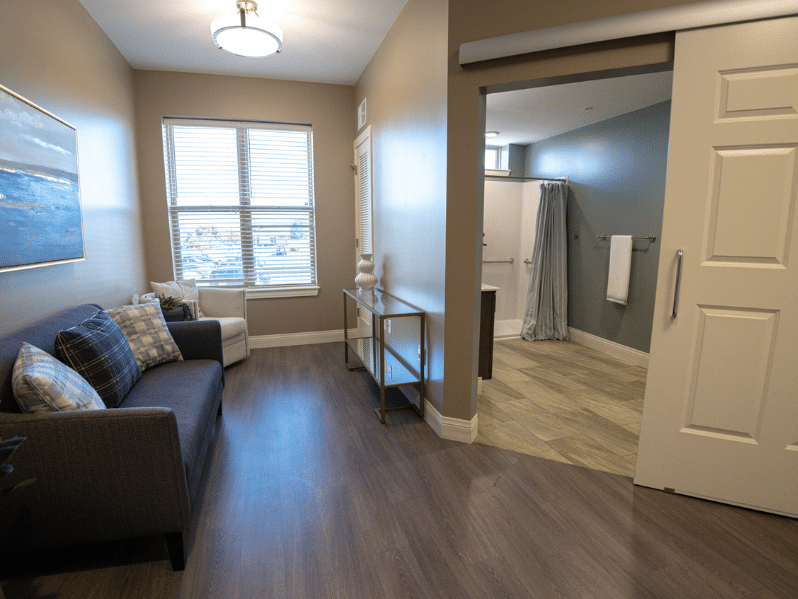
Our Memory Support suites are designed to provide luxury living with dignity. Rather than buying new furniture, arrange their favorite chair, well-loved decorations, and meaningful keepsakes in the suite before they arrive. Walking into a room filled with their own belongings can significantly ease a new resident’s anxiety.
Tips for a Successful Moving Day
Moving day marks a new chapter of connection. Focus on redirection and professional collaboration to make the day manageable.
4. Lean into Immediate Socialization
While you handle the final unboxing, encourage your loved one to explore the community. Aim to arrive during a programmed activity your loved one might enjoy, such as music therapy, art therapy, or sensory stimulation. Engaging with new friends and a routine immediately can decrease the stress of the move.
5. Acknowledge and Validate Concerns
It is common for a parent to ask to go home or express distress. Lead with empathy and acknowledge that the transition is hard. Reconfirm that they will be safe and cared for without discounting their current emotions.
6. Practice Active Listening and Redirection
When your loved one is upset, ask questions to understand their mindset. If they ask for “home,” they may be thinking of their childhood home rather than their most recent residence. Meeting them where they are provides insight into the cause of their disorientation.
7. Coordinate with the Memory Support Team
Our cross-trained team members are prepared to help with everything from personal care to engaging residents in activities. On moving day, ask how they plan to help your parent specifically acclimate to the Household Model and establish a process for receiving updates on your parent’s engagement and well-being.
Continuing the Transition After the Move
Acclimating is a process that requires time and patience from everyone involved.
8. Visit at Strategic Times
Timing is everything in the first few weeks. Opt for morning visits, as seniors with dementia are generally more alert in the early hours. Avoid late afternoon visits, which often coincide with “sundown syndrome” and increased agitation. Joining your parent for a meal in their dining area or a scheduled activity provides a clear endpoint for the visit, making goodbyes easier.
9. Accept the Adjustment Period
Recognize that it may take several weeks for a senior to feel fully at home. During this time, continue to validate their feelings rather than trying to push past them.
10. Reassess Needs and Stay Positive
There is no exact formula for a perfect fit. If your parent is not engaging after six weeks, talk with our staff to address concerns and evaluate if a different level of support is needed. Most importantly, focus on what you love about your parent; while their behaviors may have changed, they are still that same person.
Choosing the right environment is about more than just safety; it is about ensuring your parent can live with the dignity, luxury, and specialized care they deserve. With over a century of experience caring for seniors, Village Shalom provides a private and comfortable environment that offers both residents and families total peace of mind. We are here to support you through every step of this transition, from the first conversation to the first day your loved one calls their new suite “home.”
Talk to an advisor about Memory Support today! Call Justine Ogdon at 913-430-4896 or email [email protected].